The Fed's CBDC Dilemma
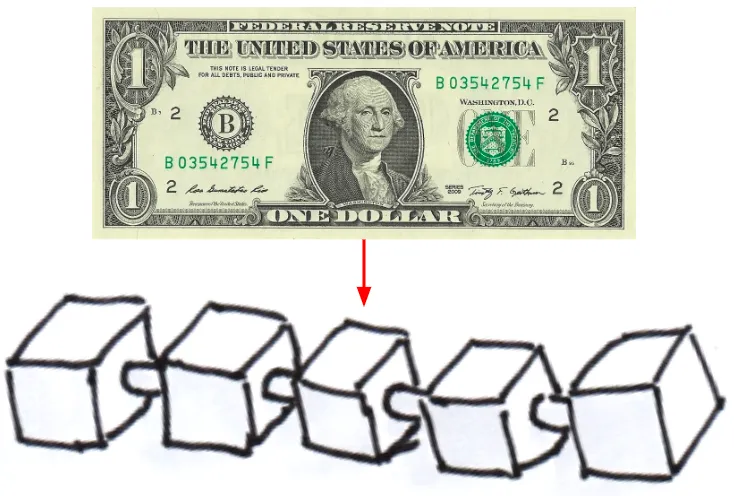
Earlier today, the Federal Reserve Board released its much-anticipated discussion paper on central bank digital currency. To be frank, little was new: Chair Powell has already said that the Fed will not develop or deploy a US CBDC without congressional approval. And Fed staff and governors have already done a good job explaining some of the pros, cons, and potential for a US CBDC. Perhaps the most novel announcement was a concrete outline of the Fed’s vision for a CBDC, which it said would most effectively be “privacy-protected, intermediated, widely transferable, and identity-verified.”
Overall, I think the best analysis of the potential for a US CBDC can be found in former Fed Governor Waller’s August 5th, 2021 speech on the subject. Titled “CBDC: A Solution in Search of a Problem?”, he clearly outlined all of the best arguments for why the Fed should develop a CBDC then rebutted them. Because his analysis was so cogent and powerful, I don’t want to spend too much time repeating it when you can just read what he had to say. In the table below, I’ve listed a short summary of arguments for a US CBDC and the flaws I see in those arguments. 1
These are my independent thoughts and do not necessarily represent the views of my employer.
| Proponents say a US CBDC could… | But the truth is… |
|---|---|
| Serve as publicly accessible, digital central bank money. (1-20 Discussion Paper, pg. 14). | An intermediated CBDC as proposed would not be markedly different from our existing system of commercial bank money. |
| Improve cross border payments. (1-20 Discussion Paper, pg. 15) | Getting the international banking system - or even the domestic banking system - to accept and use a US CBDC would be a long, tedious process that will only address a fraction of the costs of cross border payments. |
| Support the dollar’s international role abroad. (1-20 Discussion Paper, pg. 15) | Use of the dollar abroad and in trade is due to factors other than the form of money used. See Waller here or this SBF thread about dollar use in crypto. |
| Promote financial inclusion. (1-20 Discussion Paper, pg. 16) | Politically, the Fed could never supplant the entire retail banking sector. Practically, 75% of unbanked households say they don’t want a bank account; will the government be any more effective in reaching these folks than banks? See FDIC, PDF pg. 11. |
| Prevent the fragmentation of US payments caused by stablecoins. (Brainard, point 1) | A US CBDC would not compete with stablecoins unless it circulated on public blockchains. |
| Serve as a similarly safe medium of exchange as consumers move away from physical cash. (Brainard, point 2) | The adoption of digital private money for payments implies that consumers don’t care much about using non-central bank money (credit and liquidity risk). Additionally, a US CBDC as proposed would not imitate the most distinctive features of physical cash: its bearer nature, its transactional privacy, and its permissionless use. |
| Fend off the threat posed by the digital yuan. (Brainard, point 3) | The actions of the CCP should not be a model for the US; additionally, there’s little reason, aside from Chinese coercion, to expect that others will adopt the digital yuan. See Waller here. |
| Enable easier government payments, especially to the unbanked. (Brainard, point 4) | As I explained above, I’m skeptical that a US CBDC would be any more successful in extending digital financial services to the unbanked than ongoing efforts. |
| Enable real-time payments (See, e.g. Accenture) | The Fed is already developing FedNow, which is set for release in 2023. And private real-time payments systems, while imperfect, already exist through TCH RTP, not to mention stablecoins. |
As you can tell, I’m skeptical that the development and deployment of a US CBDC is an imperative task for the Federal Reserve System. It seems like the “blockchain, not Bitcoin” talking point, but for stablecoins. Crypto and blockchain are still powerful, alluring concepts for people, and there’s an impulse to do something with “the underlying technology,” fit to traditional structures. But “blockchain, not Bitcoin” was wrong. And “CBDC, not stablecoins” is also wrong. Stablecoins are dollars usable on public blockchains; CBDCs are not. Certainly, US payments infrastructure (and the payments market) would benefit from modernization, but a US CBDC would offer little that cannot be provided through upgrades to traditional systems that are ongoing.
I’m sure that CBDCs will continue to be a talking point and a will they/won’t they guessing game for at least the next few years. Because of the development of Libra and cryptocurrency and stablecoins, the Fed has been forced into consideration of a US CBDC. But my prediction is that the Fed will never launch a US CBDC. And I, for one, am thankful for that.
These are my independent thoughts and do not necessarily represent the views of my employer.
Footnotes
-
Another excellent analysis of the features of a CBDC is this paper by Paul Wong (FRB) and Jesse Maniff (KC Fed). The CBDC imagined in today’s discussion paper is the “hybrid CBDC” model described by Wong and Maniff. As you can see, the “hybrid CBDC” model offers only marginal improvements over the “RTGS+” system, what is essentially Fed Now. Wong currently leads the FRB’s Tech Lab, the FRB office that seems to have drafted the discussion paper. ↩